You can visit a place. Or you can encounter it.
Touch, don't just inform.
A Space for Everyone
Adolphe Appia was an iconoclast. He toppled the classical proscenium stage because he wanted a living theatre – one where actors, dancers and audience merge with the stage space, music and light, until the line between performer and public disappears.
Built on his idea, the first stage without a curtain or scenery opened over a hundred years ago at the Festspielhaus Hellerau. Performance space and auditorium were no longer separate but a single room – and for a few festival summers, it drew artists from across Europe: Paul Claudel, George Bernard Shaw, Hugo von Hofmannsthal, Oskar Kokoschka, Franz Kafka, Rainer Maria Rilke, and even Walter Gropius.
A stage without a curtain is an imposition and a promise at once: once you're in the room, you can no longer stand apart.
That's how we see a guided tour. The place is Appia's hall; we don't supply the scenery. And whoever joins us doesn't just watch. They ask, they push back, they discover.
Where Space Becomes Story
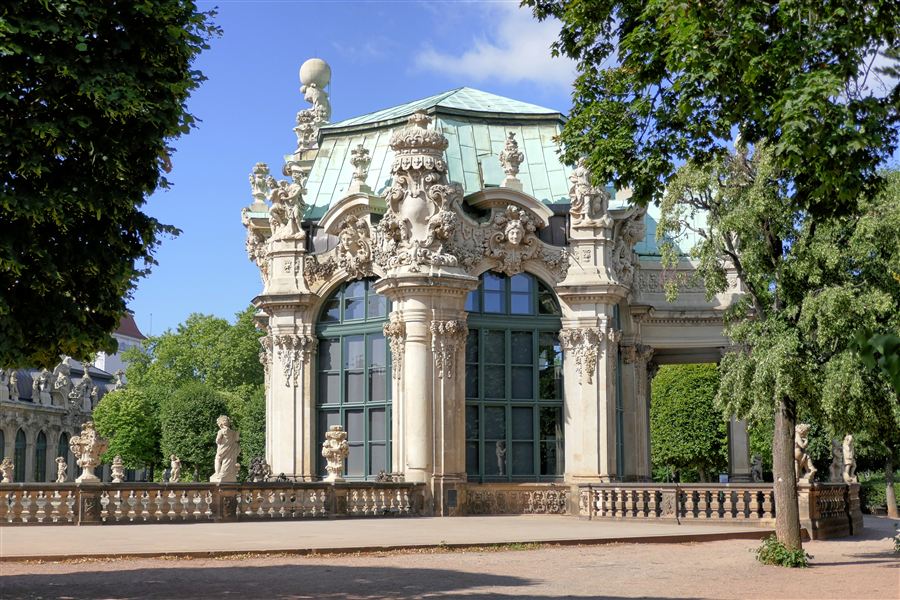
Zwinger, Wallpavillon, Dresden
The Zwinger looks like a single, seamless Baroque masterpiece. It isn't. It was never really finished. Every era has reinvented it: as an orangery, a festival backdrop, a museum forecourt, a monument to the working class, and a tourist destination.
In 2022, archaeologists excavating the site found the tip of the Mönchsbastion, a defensive wall dating to around 1545. Beneath what looks like a finished building, standing there as if it had always belonged, lies the literal remains of an entirely different city.
These are exactly the layers we uncover when we talk about a place. For us, the facade isn't the end of the story but the beginning: we read what lies behind it, and what each era has written into it.
Who We Are
Art Historians, Curators, Storytellers
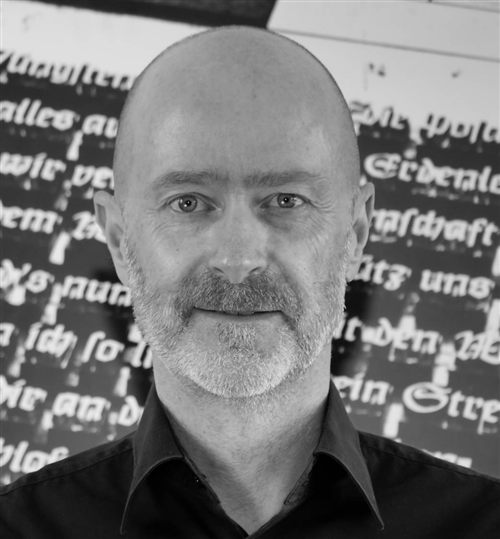

Alongside our tours, we spent years curating exhibitions on garden art and 19th-century painting, in Berlin, Cottbus, Bad Muskau and Brussels. That practice still shapes how we work today: we verify every detail as if for a catalogue, then focus, on site, on the one story that matters.
For almost ten years, we also brought these stories to the smartphone – with our own platform for audio guide apps, built for cities, churches and palaces. We learned just how much narrative a place can carry, and where technology promises more than it delivers. In the end, that path led us back to where we started: the spoken word in front of the original, in conversation with people who can ask questions.
Today, our research flows into guided tours and into DoubleTake, our podcast and blog on Saxon art and cultural history. DoubleTake, incidentally, is narrated by Michael's digitally cloned twin.
On site, though, it's really us. We're not after the completeness of a chronicle, but the one story that fits you and the place where you're standing, right now.
You can book our tours through Dresden and Saxony directly at www.dresden-stadtfuehrer.de. You'll find all tours, dates and themes there.
Our Tours →